
From Flooded Basements to Coastal Storm Surge, We’re Toronto’s Flood Restoration Experts
Toronto and the Greater Toronto Area experience some of the most intense flooding in Ontario — from summer storms that overwhelm aging combined sewer systems, to spring snowmelt that saturates drain fields, to basement flooding events that strike thousands of GTA homeowners every year. For Greater Toronto Area homeowners, flooding isn’t just a rare event. It’s a heavy summer downpour that backs up a basement drain. It’s a winter storm that overwhelms a sump pump. It’s groundwater pushing through a foundation wall before a homeowner can react.
United Water Restoration Group of Toronto has been providing flood damage restoration and storm damage restoration to Toronto, ON homeowners and businesses since 2019, earning the trust of Greater Toronto Area property owners through consistent, quality work and genuine 24/7 availability.
Call (647) 490-6817 — we answer 24 hours a day, 7 days a week, including weekends and holidays.
Flooded Basement Cleanup and Restoration in Toronto
A flooded basement is one of the most common and most stressful flood damage scenarios Toronto homeowners face. Whether the cause is a failed sump pump, a backed-up drain, storm surge intrusion, or groundwater seeping through foundation walls, the result is the same: standing water in a finished or semi-finished space that needs to be addressed immediately.
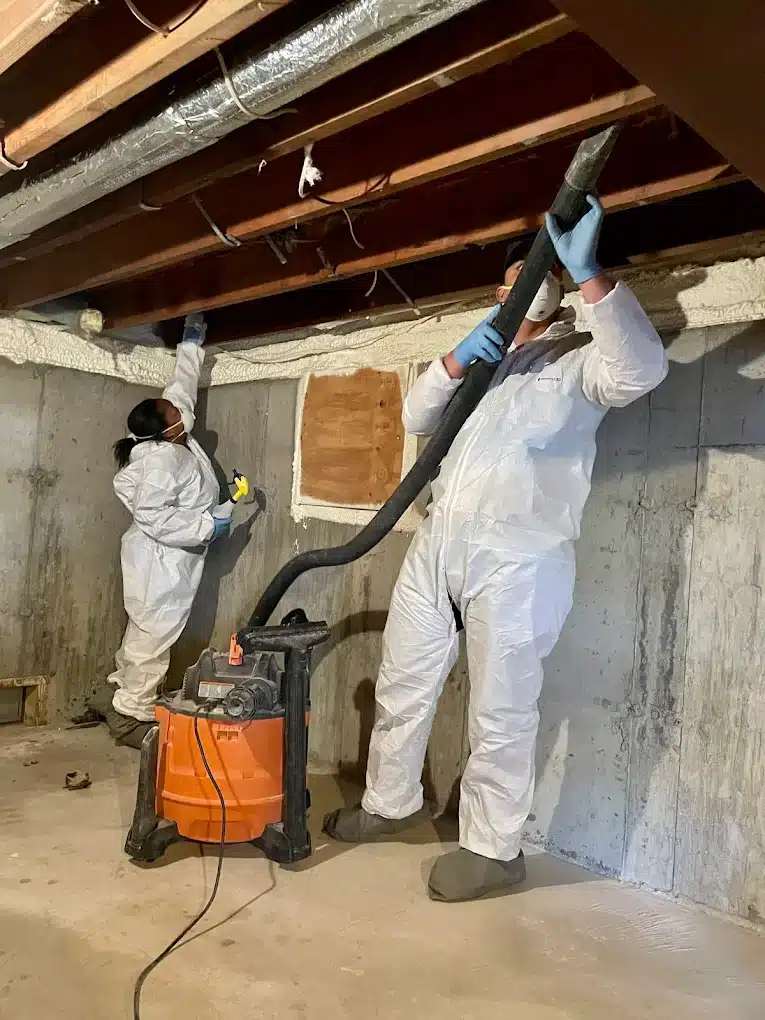
At UWRG of Toronto, our basement flooding response includes:
- Rapid water extraction using industrial submersible pumps and truck-mounted extraction equipment to remove standing water as fast as possible
- Contamination assessment — basement flooding is frequently Category 2 or Category 3 water, particularly when drain backups or sewage are involved, and we apply the appropriate remediation protocols
- Full moisture mapping of basement walls, flooring, framing, and any finished areas using thermal imaging and calibrated moisture meters to identify hidden saturation
- Structural drying and dehumidification with industrial air movers placed throughout the affected space until target drying levels are confirmed
- Antimicrobial treatment applied to all affected surfaces to prevent mold growth, which can begin colonizing within 24 to 48 hours of a flood event
- Material removal of saturated drywall, flooring, insulation, and framing where saturation or contamination requires it
- Basement restoration from bare structural materials through finished surfaces, returning the space to pre-loss condition or better
If your basement flooded, do not wait. The longer water sits, the more structural materials absorb, and the higher the risk of mold. Call (647) 490-6817 now.
Flood Restoration Services for Every Type of Toronto Flood Event
Storm Surge and Coastal Flooding
Flooding from heavy storms represents one of the most destructive scenarios for Toronto properties, particularly in low-lying communities and areas with older combined sewer infrastructure. Storm flooding is frequently Category 3 black water — carrying sewage overflow, contaminants, and debris — and requires specialized remediation protocols beyond standard water damage cleanup.
Our coastal flood restoration services include:
- Rapid water extraction and contamination category assessment
- Category 3 black water remediation protocols where sewage or chemical contamination is present
- Full structural drying and moisture mapping throughout the affected property
- Antimicrobial treatment and mold prevention across all affected areas
- Material removal and disposal where saturation or contamination requires it
- Complete property restoration through final inspection
Sump Pump Failure and Basement Flooding
Sump pump failures are one of the leading causes of basement flooding in the GTA, particularly during heavy rain events when the water table rises rapidly. When a sump pump fails — whether from a power outage, mechanical failure, or an overwhelmed system — water can fill a basement in a matter of hours.
Our sump pump failure and basement restoration response includes:
- Emergency extraction of standing water from the basement floor
- Assessment of water source and contamination category
- Full drying of basement walls, flooring, and any finished areas
- Mold prevention treatment applied immediately after extraction
- Coordination of any necessary reconstruction of finished basement areas
Storm Wind and Structural Damage with Water Intrusion
High winds during wind storms and tropical systems regularly exceed 60 to 70 miles per hour across the GTA, creating structural vulnerabilities that allow water to enter and compound the original damage rapidly.
Our wind and storm intrusion response includes:
- Emergency structural assessment and temporary board-up to stop ongoing weather exposure
- Full moisture mapping to locate all intrusion points and water migration pathways
- Extraction and structural drying of all affected ceiling, wall, and floor assemblies
- Mold prevention treatment applied to all areas where moisture has penetrated
- Complete structural repair and reconstruction from framing through finished surfaces
- Greater Toronto Area permitting handled as part of the reconstruction scope
Fallen Tree and Debris Impact
A fallen tree can breach a roof, collapse a wall section, or compromise a structural framing member — and the water that follows enters fast. Our response includes emergency board-up, debris removal coordination, full structural damage assessment, and complete reconstruction.
Why Toronto Homeowners Choose UWRG for Flood Restoration
We answer the phone — always. Not an answering service. Not a voicemail. A real person, ready to respond 24 hours a day, 7 days a week, including weekends, holidays, and the middle of a winter storm. When water is moving through your home, the speed of that first response determines how much of your property can be saved.
Our certified technicians know Toronto and the GTA inside and out — the specific construction profiles of the region’s older brick and stone homes, the basement flooding conditions common across Etobicoke, Scarborough, and Brampton, the freeze-thaw pipe burst patterns of Ontario winters, and the legacy material concerns of the GTA’s pre-1980s housing stock.
We handle the insurance so you don’t have to. From the moment we arrive on-site, we begin building the documentation your insurance claim requires — moisture readings, photographs, material records, and scope documentation compiled into a complete claims package that we submit and communicate directly with your adjuster. We work with all insurance carriers and are experienced in maximizing coverage for flood restoration claims throughout Toronto.
One team, start to finish. The same certified team that responds to your flood emergency manages every subsequent phase — mitigation, drying, remediation, and reconstruction — without handoffs, restarts, or the confusion of coordinating between multiple contractors.
Flood Restoration FAQs
What should I do immediately after my basement floods?
If it is safe to do so: turn off power to the affected area, do not enter standing water if there is any risk of electrical contact, and call UWRG of Toronto immediately at (647) 490-6817. Do not attempt to dry a flooded basement with household fans — they are not capable of drying structural materials and can spread mold spores. The faster professional extraction begins, the less damage your property sustains.
Does homeowners insurance cover basement flooding?
It depends on the cause. Standard homeowners insurance typically covers sudden and accidental water damage — such as a burst pipe or sump pump failure — but does not cover flooding from external sources like storm surge or groundwater, which requires separate flood insurance (NFIP or private). UWRG works directly with your insurance carrier and can help you understand what your policy covers when we arrive on-site.
How quickly can mold develop after a flood?
Mold can begin colonizing within 24 to 48 hours of a flood event in the right conditions. This is why immediate professional extraction and drying is critical — not just for structural reasons, but to prevent a secondary mold remediation project on top of the flood restoration.
How long does flood restoration take?
Most flood restoration projects take 1 to 2 weeks from initial extraction through final restoration, depending on the extent of the damage and whether reconstruction is required. We provide a clear timeline and scope at the initial assessment.
What areas do you serve?
UWRG of Toronto serves the Greater Toronto Area in its entirety, operating from our centrally located Etobicoke headquarters. We respond to flooded basements, storm damage, and flood restoration needs across Toronto, Mississauga, Brampton, Vaughan, Markham, and surrounding communities in York Region and Durham Region.
Schedule Your Flood Restoration Services Today
When your Toronto property floods, time is the variable you can control. The faster emergency stabilization begins, the less secondary damage your property sustains, and the smoother your path to full restoration becomes.
UWRG of Toronto provides emergency flood damage restoration and storm damage restoration services across Greater Toronto Area 24 hours a day, seven days a week, with live phone response, rapid on-site deployment, and a full-service team that manages every phase of your recovery from the first emergency call to the final inspection.
Call (647) 490-6817 now — or fill out the form on this page for same-day response.